
You’ve already connected with friends, cousins, and lab-mates on LinkedIn, but now you’re wondering, “How can I further grow my LinkedIn network?” Don’t fret; I’ve been in your shoes and successfully expanded my LinkedIn network from a handful of connections to over 500. In this article, I’ll outline the step-by-step process I used to achieve this, including the time it took.
Step 1: Improve Your LinkedIn Profile
There are millions of articles on that online, but it is quite simple. Ensure the following:
- Use professional profile and background pictures visible to everyone.
- Allow all users to send you connection requests.
- List your educational and job experiences.
- If your work involves coding, share GitHub links to your projects.
- Include all your published papers.
These basics make your profile appear more serious and professional.

Step 2: Connect with Acquaintances
Think about colleagues from university and past workplaces. Search for them on LinkedIn and send connection requests. Soon, LinkedIn’s algorithm will start giving you suggestions, which will serve as a great reminder of some of the people that you forgot about.

Step 3: Join Relevant Groups
There are groups on LinkedIn that you might join, but I personally haven’t found them very helpful. I’ve found more success in Slack channels, where most of my connections come from. Within each Slack channel dedicated to a specific interest, you’ll often find a sub-channel for member introductions. Introduce yourself there and provide a link to your LinkedIn profile. Here’s an example of how I would introduce myself:
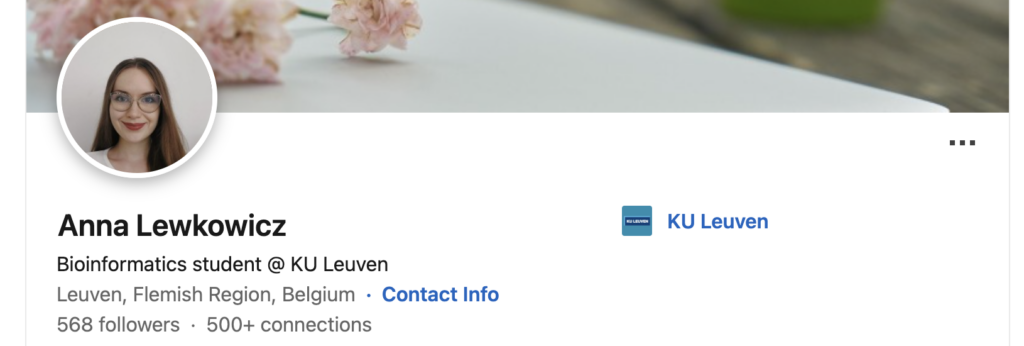
“Hi! I’m Anna, a student of Master of Bioinformatics at KU Leuven. I’m passionate about all things bioinformatics, especially its application in astrobiology. You can find my LinkedIn profile here.“
Regularly check the introductions sub-channel and whenever a new member joins and shares their LinkedIn profile, send them an invitation. It’s a good practice to inform them of how you found them, for example: “Hey! I found you on the XYZ channel, and I’d like to connect.” If you found some common interests in their introduction message, make sure to talk with them about it as well.

Step 4: Network at In-Person Events
Whenever you meet a new person during an in-person event make sure to ask them for their LinkedIn profiles. With professors or senior professionals, it may be trickier. If they are well-known, send them an invitation after meeting them. Avoid asking them to find their profile on your phone; it’s not the best approach.
The truth is that you will find that many people in academia do not have LinkedIn accounts or not use them. Don’t be discouraged by this. LinkedIn is still a great platform, but it is more popular among industry professionals rather than academics.

Step 5: Have a Business Card
This is a bit of an unpopular opinion, but I do believe that even when working in academia, or being a student, you should have a business card. It is not expensive to print and there are lots of templates available online. I decided to print mine after I was asked plenty of times for it and I wasn’t prepared, so do yourself a favor and don’t repeat my mistake. All your social media profiles should be marked on the card.
I also heard about this funny trick. When you’re not enjoying the conversation you’re having at a conference, you give the person your business card and tell them that you need to go but you’d love to stay in touch. I haven’t tried it myself, but it’s always better to be prepared, right? 😉

Step 6: Accept Invitations from Strangers
I know some people hesitate to accept LinkedIn invitations from strangers. While this might be a great strategy for your personal Facebook account where you share the photos of your dog, you should not do it on LinkedIn. I am not saying that you must always accept all invitations from strangers, but if you look at their profile, and it matches your interests – why not?
For added safety, you can send them a message to inquire how they found you.
This is how I grew my network from almost nothing to 500+ connections. The process took between one and two years, but if you are dedicated, you can achieve it faster. Remember that this list is not exhaustive. I’d love to hear about your networking strategies and which ones have proven effective for you. Let me know in the comments!
If you found this post helpful, you can support my blog by buying me an online coffee! ☕️
Until next time,
A.